

Carolina Christian College Mission Statement
It is the mission of Carolina Christian College to provide biblically based academic programs that prepare men and women of all races for ministry and community service with a focus on the African-American community.
Carolina Christian College (CCC) is a 4-year and above, private, not-for-profit, special-focus, faith-based institution.” CCC educates persons for Christian ministries through a program of Biblical and theological studies, general education in the arts and sciences, and professional studies. Emphasis is placed upon cultural awareness and leadership that will prepare workers to establish and serve the church in the United States and around the world.
In accordance with the college’s special purpose stated above, Carolina Christian College recognizes that a student must be as fully prepared as possible. Therefore, the objective is to inspire and involve students in pursuit of the following:
- Authentic Christian life and experience
- A broad-based background in general education
- A thorough knowledge of the Bible
- Demonstrating activity in Christian service

Carolina Christian College Statement of Faith
We believe in one Almighty and All-Wise God who is the Creator of all things and who has expressed Himself in the personalities of Father, Son, and Holy Spirit.
We believe that Jesus of Nazareth, the Messiah prophesied by the Old Testament Scriptures, is the divine Son of the Living God and the only Savior of humankind.
We believe fully in the inerrancy and inspiration of the Bible; that is to say, that it is the infallible Word of God, breathed by Him to the Apostles and Prophets who wrote it down for our instruction. The Bible is, therefore, the all-sufficient rule of faith and practice.
We believe that salvation from sin and final judgment is made available by the grace of God through the death of Jesus Christ for all who come to Him through true faith and full obedience to His Gospel through faith, repentance of sin, confession of faith in Jesus Christ as Savior, water baptism, and a new life and service through the Holy Spirit.

Welcome to Carolina Christian College
As you discover, renew, or continue your relationship with Carolina Christian College, allow me to reflect on my truth that I cherish. II Chronicles 7:14 states,
“If my people, who are called by my name, will humble themselves and pray and seek my face and turn from their wicked ways, then I will hear from heaven, and I will forgive their sin and will heal their land.”
The if-then clause has taught me that if I act, God will act. So today I praise God for you acting. At whatever stage you are, this is a joyous occasion that signifies you are taking steps to act.
You have decided to answer the call and further your Biblical education. I am appreciative that you have entrusted CCC to educate and enhance your personal ministry. It is our desire to meet your needs through education, empowerment, and edification as you are prepared for the real world.
You are joining a rich history that prides itself in nurturing the servants of God so that they will expand God’s kingdom. We are only one member in this great body of Christ, but we can change the world through students like you.
As I reflect on the lovely students of CCC, I know that you too will strive for excellence and act on the calling that God has placed on your life. I look forward to meeting you and one day shaking your hand as you receive your collegiate degree.
Move forward and remember that education is the foundation of success.
In his service,
LaTanya Tyson, PhD.
Accreditation

CCC is chartered by the State of North Carolina as a post-secondary nonprofit institution by the United States Government
Carolina Christian College is accredited by the Association for Biblical Higher Education Commission on Accreditation (5850 T. G. Lee Blvd., Ste. 130, Orlando, FL 32822, 407.207.0808) to grant certificates and degrees at the Associate, Baccalaureate, Master’s, and Doctoral levels. The ABHE Commission on Accreditation’s recognition with the Council on Higher Education Accreditation (CHEA) includes certificates, diplomas, associate, baccalaureate, and graduate degrees, including doctoral degrees. The Commission’s scope of recognition with the U.S. Department of Education does not include doctoral education.
Carolina Christian College is accredited by the Association for Biblical Higher Education Commission on Accreditation (5850 T. G. Lee Blvd., Ste. 130, Orlando, FL 32822, 407-207-0808) to grant certificates and degrees at the Associate, Baccalaureate, Master’s, and Doctoral levels.
CCC credits are readily accepted in transfer to all colleges of the ABHE as well as to other Biblical and Secular colleges. Many CCC students and graduates have also transferred to secular colleges and universities without loss of credit.
Consumer Information
Academic Statistics
3:1 Student/Faculty Ratio
12 Average Class Size
44% of Faculty hold terminal degrees
Active Ministry
The data for active ministry is determined using the new-to-the-school degree-seeking students for the academic year prior to the reporting year (ex. the 2025 reporting year will be based on the new-to-the-school degree-seeking students for the 2024/2025 academic year). Of those students, those who have identified that they are actively involved in their church ministry are counted as being in active ministry. The College has begun to include the cohort size and number of students who meet the active ministry criteria with the 2024 reporting period. Data for the years prior to 2024 is included below the data for 2024 to the present.
| Reporting Year | Cohort size | Number in Active Ministry | Percent in Active Ministry |
|---|---|---|---|
| 2025 | 45 | 14 | 31.11% |
| 2024 | 53 | 32 | 60.38% |
| Data prior to the 2024 reporting year: Active Ministry |
|---|
| 2023 – 57.32% |
| 2022 – 48% |
| 2020 – 55% |
| 2019 – 49% |
| 2017 – 77% |
Full-Time Ministry/Employment Rates
Though Carolina Christian College does not offer professional programs which require reporting of employment rates, we provide education for those who are in ministry and are seeking additional education. We also provide education for those who are seeking to increase their biblical knowledge for personal growth. The College reports data for students who have graduated from the College and are employed in full-time ministry, part-time ministry, or volunteer in a ministry context. The cohorts for each reporting year consist of the students who graduate from the College in the previous academic year (ex. the 2025 reporting year will be based on the students who graduated in the 2024/2025 academic year). The College has begun to include the cohort size and number of students who meet the Full-Time Ministry/Employment Rates criteria with the 2024 reporting period. Data for the years prior to 2024 is included below the data for 2024 to the present.
| Reporting Year | Cohort size | Number in Active Ministry | Percent in Active Ministry |
|---|---|---|---|
| 2025 | 4 | 3 | 75% |
| 2024 | 11 | 5 | 45.5% |
| Data prior to the 2024 reporting year: Full-Time Ministry/Employment Rates |
|---|
| 2023 total alumni – 58% |
| 2022 total alumni data – 58% |
| 2021 total alumni data – no data available55% |
| 2020 total alumni data – no data available |
| 2019 Alumni – 68% |
| 2017 Alumni – 64% |
CCC Retention Rate
Beginning with the 2024 reporting year, the annual retention rate is calculated using the number of degree-seeking undergraduate students who were new to the institution (this includes transfer students) during any enrollment period in the academic year two (2) years prior to the reporting year. The rate is determined by the number of students who graduated or re-enrolled during any enrollment period in the full academic year following the academic year in which they enrolled (ex. the 2025 reporting year will use the students who enrolled in the 23/24 academic year and those who graduated or re-enrolled in the 24/25 academic year). Prior to the 2024 reporting year, the College determined the retention rate using all the students (new and continuing, undergraduate and graduate) who took classes in the academic year two (2) years prior to the reporting year and determined how many of those students graduated or re-enrolled in the following academic year. The College changed the reporting to align with the parameters required in the reporting of these numbers to our accreditation body (ABHE). Data for the years prior to 2024 is included below the data for 2024 to the present.
| Reporting Year | Cohort Academic Year | Cohort Size | Number who graduated or re-enrolled | Retention Rate |
|---|---|---|---|---|
| 2025 | 2023/2024 | 48 | 2 | 4.17% |
| 2024 | 2022/2023 | 28 | 11 | 39.29% |
| Data prior to the 2024 reporting year: Retention Rate |
|---|
| 2023 – 52.5% |
| 2022 – 45.33% |
| 2021 – 48% |
| 2020 – 40% |
| 2019 – 30% |
| 2018 – 79% |
| 2017 – 69% |
Graduation/Transfer Out Rate
As of the 2022 reporting year, the Completion and Transfer Out rates will be reported together. The Graduation/Completion and Transfer Out Rates are calculated based on the number of students who attended college for the first time in the Fall semester 6 years prior to the reporting year. For the Graduation Rate, the institution looks at the number of those students who graduated from their program within 150% of the published time. For the Transfer Out Rate, the institution looks at the number of students in that group who did not graduate from the program but transferred to another institution or program. It should be noted that there were difficulties in reporting transfer-out students in prior years. The College is working on getting more accurate information regarding student transfers.
| Reporting Year | Cohort Year | Cohort Size | Number who graduated or transferred out | Graduation/Transfer Out Rate |
|---|---|---|---|---|
| 2025 | 2019 | 10 | 1 | 10% |
| 2024 | 2018 | 13 | 3 | 23.08%% |
Data prior to the 2024 reporting year: Graduation/Transfer Out Rate
Graduation/Transfer Out Rate
2023 – 27.27%
2022 – No first-time-in-college students enrolled in Fall of 2016
Completion/Graduation Rate
2021 – 100%
2020 – 35%
2019 – 67%
2018 – 79%
Transfer Out Rate
2021 – No data available
2020 – 3%
2019 – 16%
2018 – 14%
Institutional Goals
From its inception, Carolina Christian College has focused on providing quality biblical education to those who were underserved in the area. As such, the College provides opportunities to many students who did not see themselves as having access to a college education because of their performance in their K-12 education. Most of the students who enroll in a program at Carolina Christian College are not educationally operating at the level of college in which they are enrolling. The College, therefore, works to develop the students in areas in which they may not show proficiency. The College also welcomes students who may be of other faiths to enroll in a program at the institution. As we educate the students in biblical and academic areas within their selected concentration, the College also strives to accomplish the following institutional goals:
- The College will provide our students with an authentic Christian life experience.
- The College will develop our students into more responsible citizens.
- The College will develop the students’ critical thinking skills.
- The College will foster a culture that promotes scholarship and life-long learning.
Program Objectives
To meet the above stated institutional goals, Carolina Christian College has set objectives for each of our programs. We offer Associate and Baccalaureate degrees in Ministry, a Master’s program in Religious Education (MRE), and a Doctor of Ministry degree (D.Min). Our Baccalaureate and Master’s programs have concentrations from which students may choose. Our programs and concentrations, along with the Student Learning Objectives for each, are listed below.
Program Outcomes
In September of 2022, Carolina Christian College completed a total restructuring of its assessment. Through prayer and renewed focus on our mission as an institution, we created new Institutional Goals, Program Objectives, and Course Objectives for all the programs and courses we offer. We rolled out our new objectives in the 2022 Fall semester. Outcomes for the programs are included as part of our Institutional Report for each academic year. Below, you will find the links to previous program outcomes information and to the Institutional Research Reports.
2025-2026 Institutional Research Report
History
MISSION:
It is the mission of Carolina Christian College to provide Biblically based academic programs that prepare men and women of all races for ministry and community service with a focus on the African-American community.
The First Graduating Class of Carolina Christian College
In 1945, two dynamic, progressive-thinking evangelists, one Black and the other white, embarked on a historical journey that birthed Carolina Christian College. Dr. R. L. Peters, an innovative Black evangelist from the Christian Churches and Churches of Christ, and J. W. West, a well-known evangelist of the Appalachian Mountains, agreed together to begin a training school for Black men and rural whites that aspired to leadership in Christian ministry but did not have access to quality education in this field. Dr. Peters led the training and equipping work, and Reverend West raised the finances. Thus was born, in a storefront building on Wheeler Street in Winston-Salem, North Carolina, a school known at the time as The Christian Institute and later Winston-Salem Bible College. This fledgling school facilitated the education of both Black and white and male and female students in integrated classrooms during the turbulent days prior to the modern “Civil Rights Movement.” Dr. Peters’ vision and desire to help the hurting and disenfranchised in our community also propelled him to start a mattress factory as his “tent ministry,” employing the disabled. This business/ministry later became the “Industries for the Blind” in Winston-Salem.
In May of 2007, the college’s Board of Directors renamed the college “Carolina Christian College,” better reflecting the impact of the school.
For more than seven decades, Carolina Christian College has been training Christian leaders that are having a positive impact in their communities. These well-trained leaders positively influence communities and nations around the world, leading and planting churches and taking active leadership roles in private and government sectors and the business community.
The college has developed a special emphasis on leadership and ministry. This focus is a natural outgrowth of the historical mission of educating African-Americans for leadership and ministry. Carolina Christian College has equipped and educated students from many foreign nations. Throughout its history, many of the college alumni have served in cities across the United States and around the world. We are working to furnish the kind of leadership that can bridge the communication gap that exists between people of different cultures locally and around the world. CCC offers a unique opportunity for African American, Caucasian, and students of all races interested in urban ministry. Our proactive interracial environment provides a social and educational experience that enables our students to become successful leaders in the community with a Biblical worldview.
Carolina Christian College continues to fulfill the vision of its founders. The student body reflects the community that it serves with Black and white, male and female students. The heart of Carolina Christian College is expressed in our motto, “Preparing real people for real ministry in a real world.”

Board of Directors
Meet Our Board of Directors
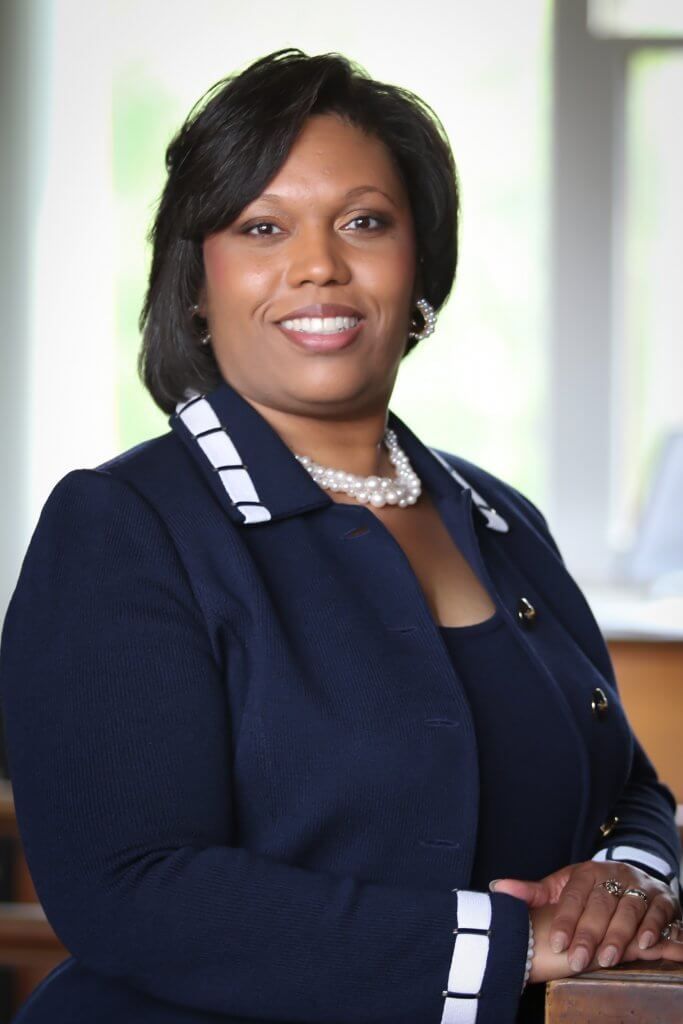
Dr. Denisha Hendricks-Board Chair

Leah Mitchell-Vice Chair
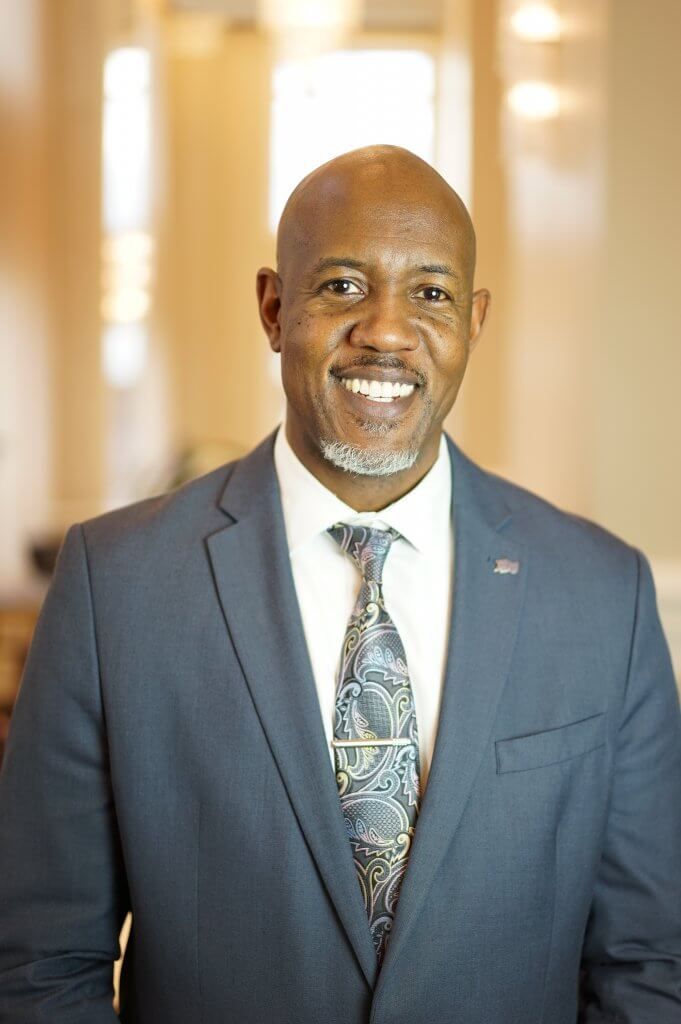
Dr. Doug Hall
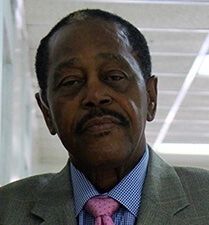
Eddie Hill

Dr. Valerie Hollingworth Baker
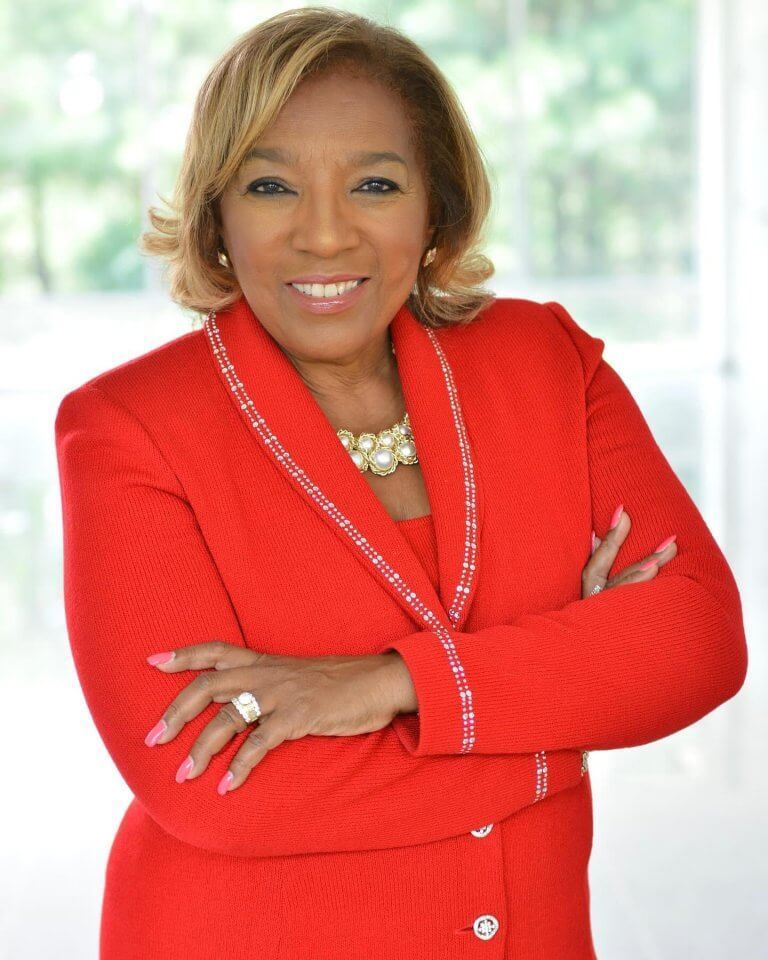
Adrienne Johnson
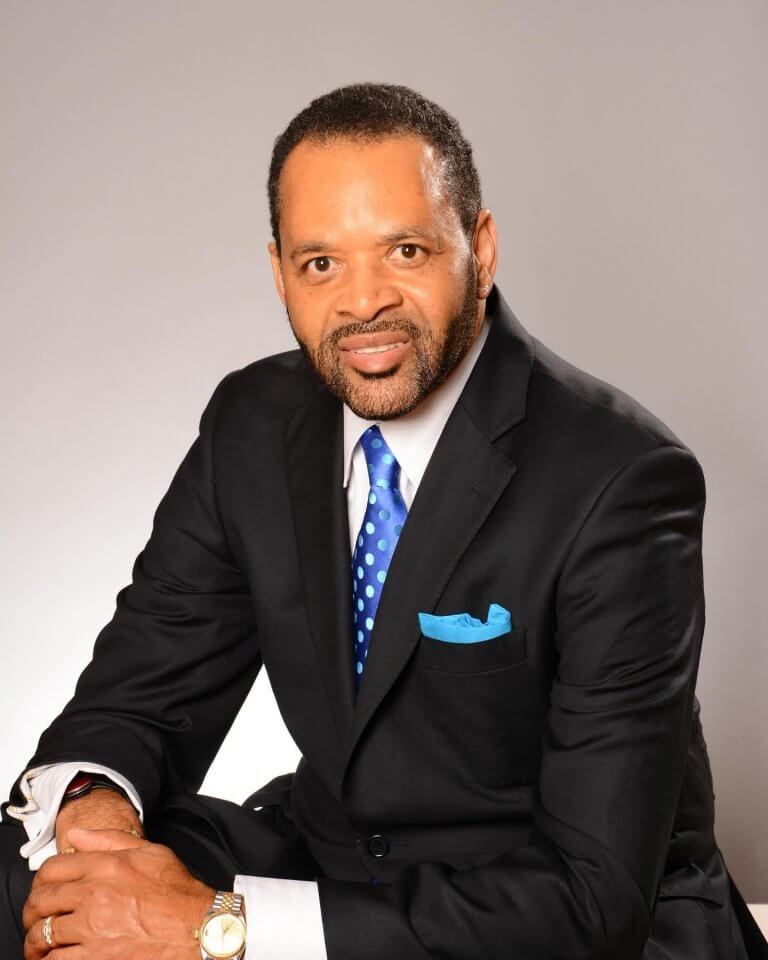
Joe Johnson



